Language
- Deutsch
- English
- Español
- Français
- Italiano
- Nederlands
- Português
Currency
- AUD Australian Dollar
- CAD Canadian Dollar
- EUR Euro
- GBP Pound Sterling
- SGD Singapore Dollar
- USD US Dollar
- ZAR Rand
The natural beauty of Africa's most iconic destinations never fails to inspire awe in those fortunate enough to experience them. The continent offers landscapes that beg to be explored and scenes that promise to take your breath away, and for many this certainly is the case.
The majestic Mount Kilimanjaro towers 5,895 meters (19,341 feet) above sea level, attracting an astonishing 30,000 to 50,000 climbers each while the Masai Mara's Great Wildebeest Migration, where over 1.2 million wildebeest, zebra, and Thomson's gazelle journey across the Serengeti-Mara ecosystem draws thousands of visitors on its own.
From the shifting dunes of the Namib desert to the mist-covered forests of Uganda, Africa's landscapes tell stories older than time itself. Each corner of the continent holds its own kind of magic – wild, untamed, and breathtakingly beautiful. Join us as we journey through some of Africa's most iconic places, where nature still takes centre stage.

Both a UNESCO World Heritage Site and one of the Seven Natural Wonders of the World, Victoria Falls is a once-in-a-lifetime bucket-list experience in Africa. Locals call it Mosi-oa-Tunya – The Smoke that Thunders – and in full flood you'll understand why: the rumble made by the Zambezi River tumbling over 100 metres into the Batoka Gorge is heard long before you reach the Falls themselves, and its spray visible from 30 kilometres away.
A full mile wide, Victoria Falls is one of Africa's most famous sights. Accessible from both the Zambian and Zimbabwean sides of the river, Victoria Falls is at its most dramatic from March to May when it is an unbroken cascade of water, decorated by sunlit rainbows. At the height of the dry season – from August to November – only the major channels remain and the Zambian side dries up almost completely.
But there's more to the area than just the Falls – this is Africa's undisputed adventure capital. Adrenaline-seekers come here for epic white-water rafting and bungee jumping but there's also game viewing, bird watching and canoe safaris-browse all the top Victoria Falls activities.
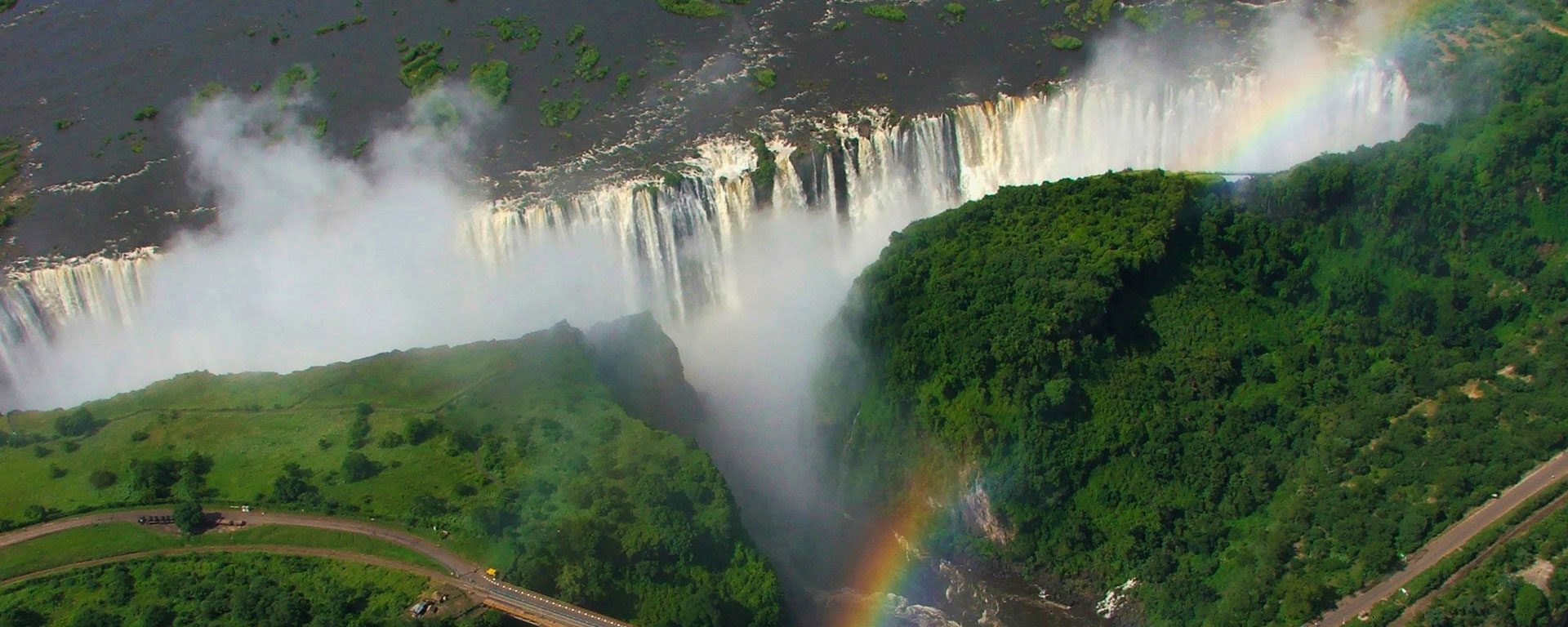
The best time to visit the Victoria Falls is from February to May, after the summer rains, when the falls are at their greatest volume and most dramatic.

The indigenous Khoikhoi people called it Hoerikiwaggo – The Mountain in the Sea – but it’s better known as Table Mountain, the most famous landmark in Cape Town, South Africa.
More complex in shape than its front-on view suggests, Table Mountain is part of a range that ends at Cape Point. Numerous hiking trails snake their way up and all over Table Mountain but the cable car provides the easiest ascent. The mountain and ocean views from the top are nothing short of spectacular.
Table Mountain’s appeal also lies in its unique flora. Known as fynbos, the diversity of flowering plants is staggering – nearly 1 500 species can be found on the mountain, the same number found in the British Isles. Among the most common animals found on Table Mountain are dassies, which look like rabbit-sized guinea pigs and are, amazingly, distantly related to the elephant.
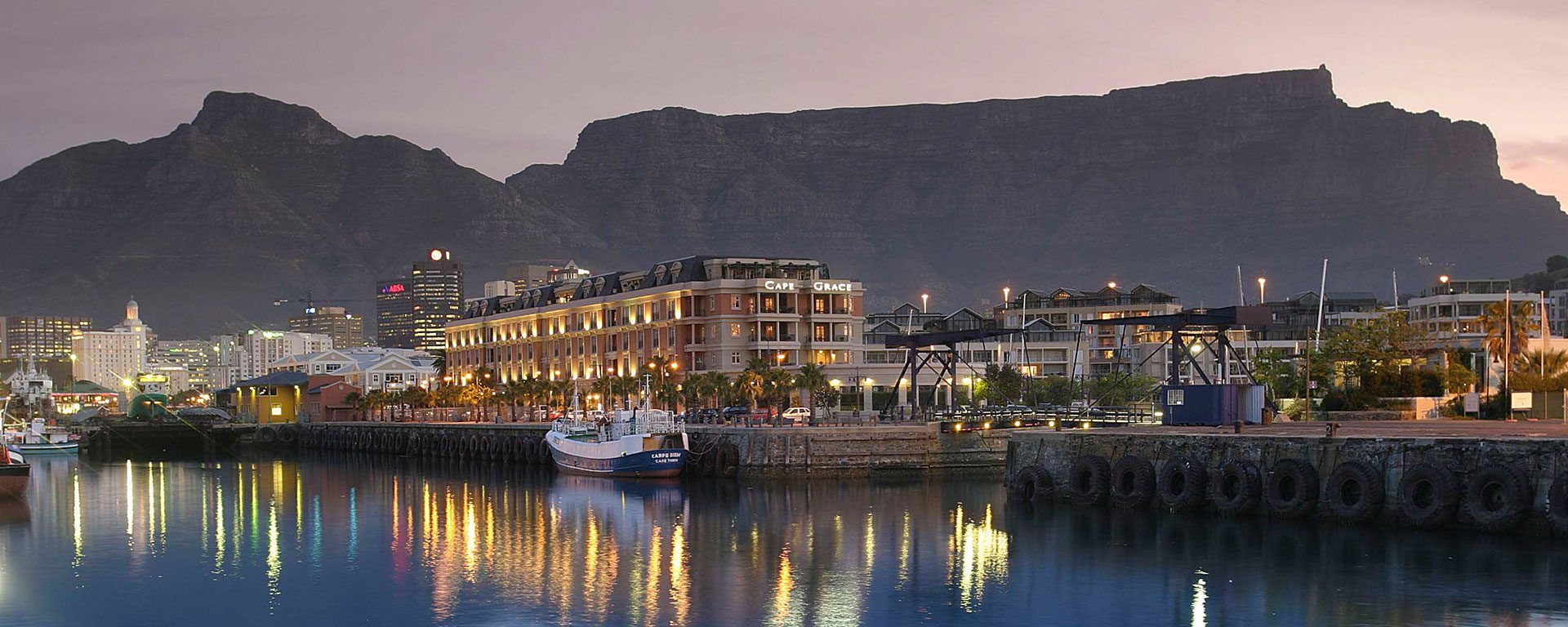
For memorable views and good weather, the best time to go to Cape Town is during South Africa's late spring and summer months (roughly November to February). This time of year is also a great time for a South Africa safari, while the denser vegetation makes for slightly tougher spotting, this period promises fewer crowds and preferable rates.

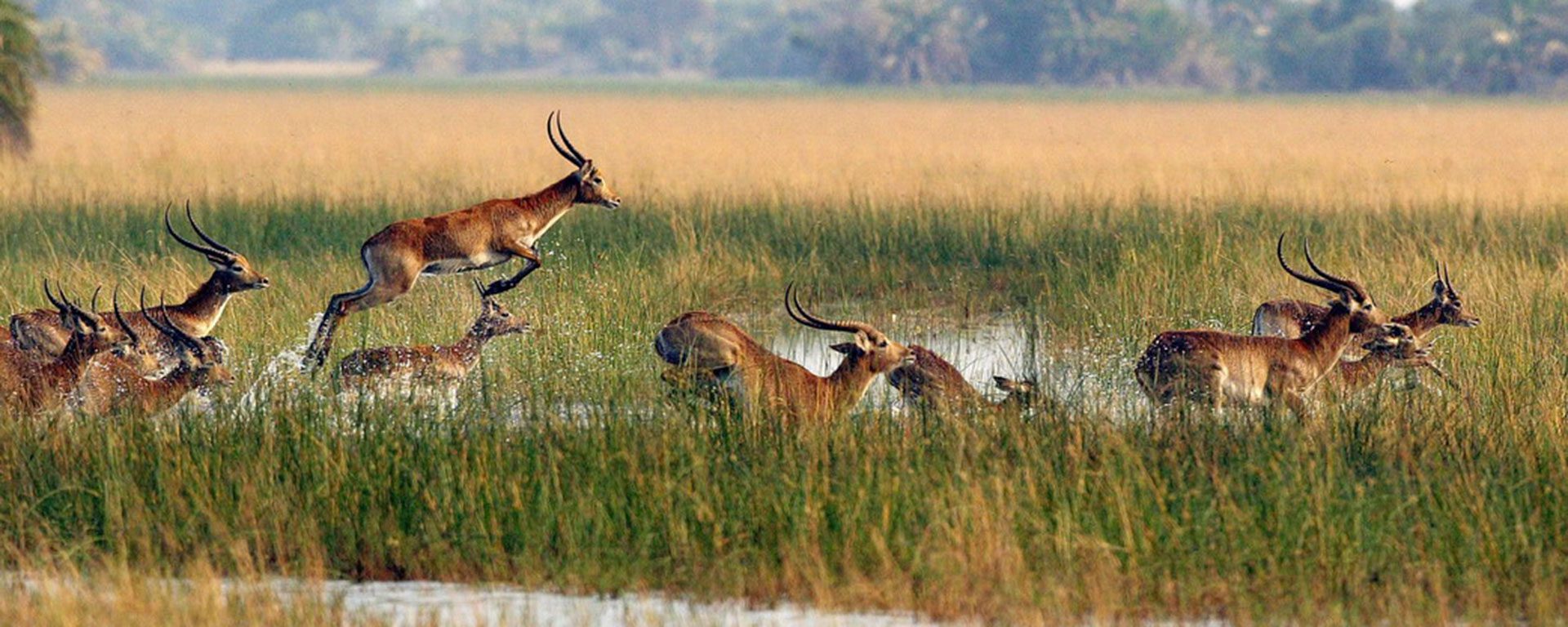
This extraordinary wetland is one of the most famous places in Africa when it comes to wildlife. A freshwater oasis in Botswana’s unforgiving Kalahari, the Okavango Delta is a vast maze of waterways, lagoons and floodplains. Needless to say, the game viewing is amazing, especially when the Okavango’s annual flood coincides with Botswana’s dry winter season.
Home to around a quarter of a million animals, the Okavango Delta is famous for not only water-loving species such as hippo and crocodile. The Delta's forested islands and grasslands provide habitat for huge herds of buffalo and elephant, antelope of all shapes and sizes plus a bird list that nudges an incredible 500 species. All the big predators are present, and the Okavango Delta is one of the best strongholds of the endangered African wild dog.
Protected by the Moremi Game Reserve and private concessions, there are fly-in lodges scattered across the Okavango Delta offering game drives and guided walking safaris while motorised boats or canoes are used to venture into the deeper areas of the waterway.
This is a year-round safari destination, but for the most iconic combination of water-based experiences and predator visibility, the best time to visit the Okavango is from June to October, when the dry season brings sparse vegetation, making for easier sightings.

Lying off Tanzania’s coast, Zanzibar is an intense melange of colour, flavour, and culture that could capture your attention for weeks. Ringed by sandy beaches and a number of smaller islands, the ‘Jewel of the Indian Ocean’ combines African, Middle Eastern, and European influences to produce a distinct flavour as potent as the spices for which the island is most famous.
Home to a wide range of beach resorts, the snorkelling and diving conditions are superb. The outlying islands of Pemba, Mafia, Chumbe and Mnemba provide classic ‘desert island’ destinations and top dive sites but be sure to take a walk through the narrow, twisting alleys of Stone Town – a World Heritage Site and the island’s historical capital.
Zanzibar makes for the perfect tropical destination many times of the year, but the optimal time to visit Zanzibar is during the dry season from June to October, when sunshine, a warm sea, and calm conditions make for a perfect beachside destination. This time of year also coincides with Tanzania's safari high season, allowing for a perfect bush and beach getaway.

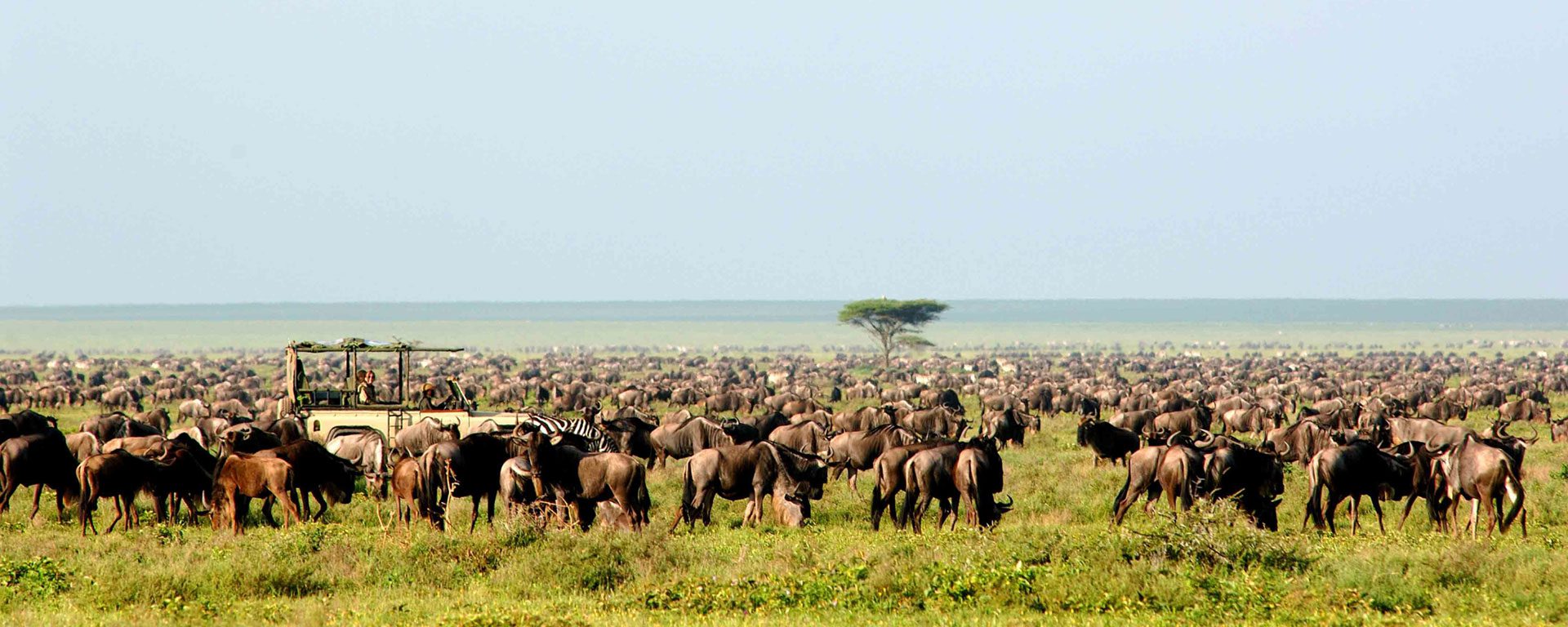
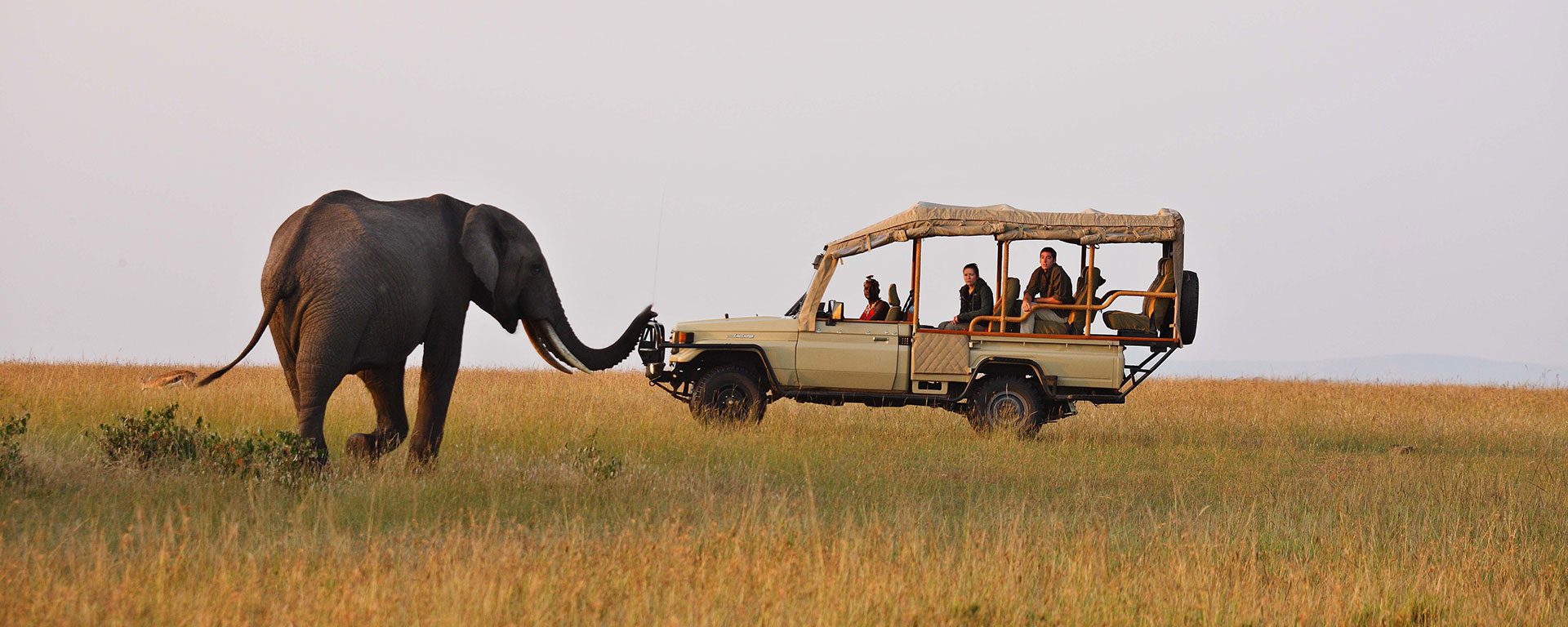
One of the most famous sights in Africa is that of hundreds of thousands of wildebeest migrating across the Masai Mara and Serengeti savannah. Huge numbers of zebra and gazelle also accompany the herds, all of which makes for fantastic game viewing, if only for the chances of seeing Africa’s top predators in action.
Kenya’s world-renowned Masai Mara is the starting point for the wildebeest migration. In November, driven by the availability of fresh grazing and water, the herds head south into Tanzania’s Serengeti where they spend the next eight months running the gauntlet of crocodile-infested rivers and big cat ambushes. By July, the survivors are making the last of the perilous river crossings back into the Masai Mara.
A contiguous ecosystem with adjoining private conservation areas, the Masai Mara and Serengeti can be visited at any time of year thanks to their abundant resident wildlife, often providing close-up sightings. Red-robed Maasai tribesmen tending their cattle complete the classic East African picture.

For the legendary wildlife spectacle of the Great Wildebeest Migration, the best time to visit the Masai Mara is roughly August to November. That said, the Mara offers fantastic game viewing year-round.

Located in Tanzania and known locally as Kilema Kyaro -The Mountain of Greatness – Mount Kilimanjaro stands as Africa's highest peak and one of the world's most iconic natural landmarks. Rising 5,895 metres (19,341 feet) above sea level, this solitary giant dominates the northern Tanzanian plains, its snow-dusted summit gleaming under equatorial skies.
Kilimanjaro is not only a mountain but a journey through five distinct ecological zones, from lush rainforest to alpine desert and, finally, the stark, icy crater at Uhuru Peak. Each step upward feels like crossing a continent. Despite welcoming up to 50,000 climbers each year, the mountain's upper slopes remain peaceful, broken only by the crunch of boots and the whisper of the wind.
For many, summiting Kilimanjaro is a deeply personal pilgrimage – a test of spirit rewarded by sunrise above the clouds. But even for those who simply gaze upon it from below, Kilimanjaro's quiet majesty has a way of stirring something indescribable within.
The ideal windows to climb are during the two drier seasons, the first being from January to mid-March and the second, late June to October. These periods offer clearer skies and better summit success conditions

In the heart of the Namib Desert lies Sossusvlei – a place where time seems suspended by the surrounding stillness and the landscapes go on almost endlessly. The name means “dead-end marsh,” yet there is nothing lifeless about these vast, sculpted dunes, some soaring over 300 metres (984 feet) high.
Shifting with the wind, the dunes change hue from a smooth terracotta during the day to a deep crimson as the sun arcs across the sky, creating a play of shadow and light that photographers dream of. At dawn, Sossusvlei is quiet except for the sounds of blowing sands, and with the first light of day, the dunes light up in a brilliant molten gold.
Nearby, the haunting Deadvlei pans, where ghostly camelthorn trees stand rooted in white clay, tell stories of a time when rivers once flowed here. Though stark and silent, Sossusvlei's beauty is profoundly moving: a reminder that even in the harshest places, nature creates art beyond imagination.
The best time to visit Namibia is in the dry months from May to October, when skies are clear, and the weather more suited for exploring.

Hidden in the misty hills of southwestern Uganda, Bwindi Impenetrable Forest feels like another world. Its name says it all, picture thick vines, tall trees, and dense foliage woven together to form a wild, green maze alive with sound and movement.
This ancient rainforest is home to nearly half of the world's remaining mountain gorillas. Trekking through the mist to find them is an unforgettable experience; a moment in time where the world slows as you witness these gentle giants in their natural habitat.
But there's more to Bwindi than its famous gorillas. The forest is home to more than 350 bird species, red-tailed and colobus monkeys, as well as around 220 recorded butterfly species which live beneath Bwindi's rich, emerald canopies.
For gorilla trekking and access to the forest habitat, the best periods to travel to Uganda are the dry seasons: June to August and December to February, when trails are firmer and rainfall is reduced.
Let our Africa Safari Experts craft a tailor-made journey that brings your dream destinations to life, from the Okavango Delta's wild waterways to Zanzibar's sun-soaked shores.