Language
- Deutsch
- English
- Español
- Français
- Italiano
- Nederlands
- Português
Currency
- AUD Australian Dollar
- CAD Canadian Dollar
- EUR Euro
- GBP Pound Sterling
- SGD Singapore Dollar
- USD US Dollar
- ZAR Rand

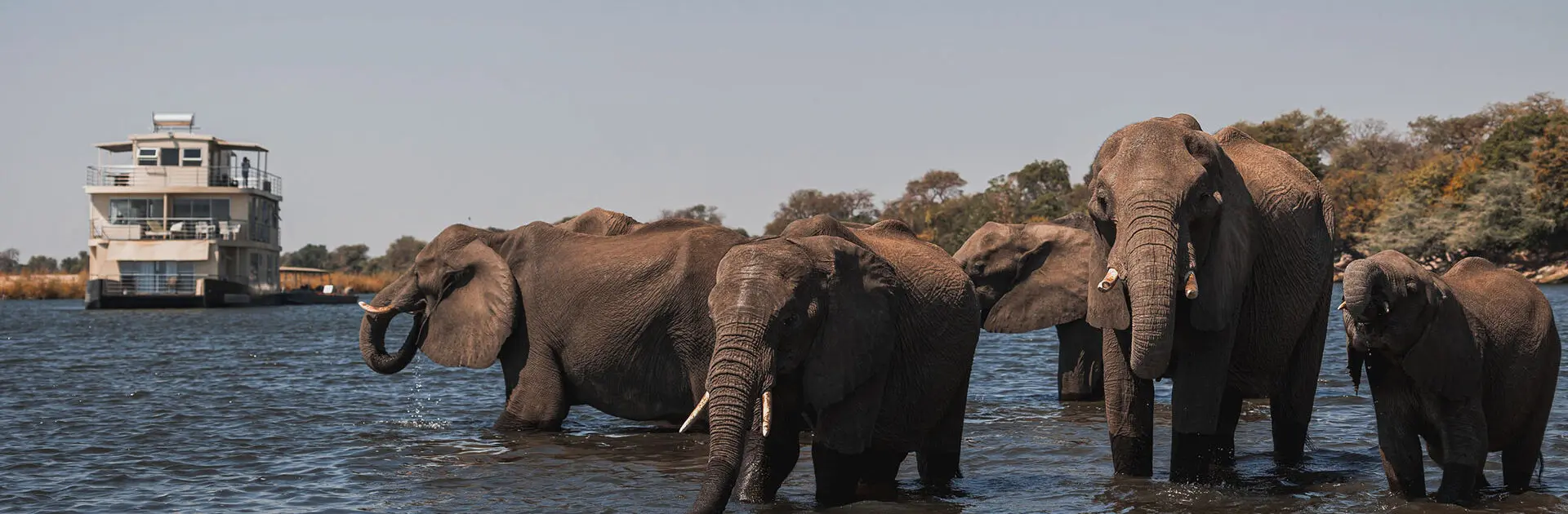
In our annual State of Safari report, we take a closer look at how safari travel is changing, from shifting traveller expectations and top destinations to sustainability, conservation, and wider industry trends. Using real-world insights, we highlight how safari travel is evolving and what lies ahead for Africa's tourism industry.
Go2Africa is a leading Africa-based tour operator, trusted by travellers for over 25 years to design journeys that are seamless, personal, and deeply connected to the African continent.
Every itinerary is crafted by our dedicated Africa Safari Experts who know the landscape, have walked the trails, stayed in the camps, and built long-standing relationships with the people who bring each experience to life. With a deep understanding of diverse traveller preferences, Go2Africa excels in providing personalised accommodation recommendations that align with individual tastes and desires, ensuring a perfect match for every luxury safari.
Our distinct commitment to personalised experiences allows for tailored itineraries that cater to individual preferences, ensuring that each journey feels exclusive and special. From first enquiry to returning home, Go2Africa is known for its care, attention to detail, and ability to create safari adventures that stir the soul. This commitment to quality has earned us thousands of five-star reviews and recognition from industry leaders such as Condé Nast Traveler, Travel + Leisure, and the World Travel Awards.
At the heart of it all is our purpose to use travel as a force for good. As part of Nawiri Group, every journey with Go2Africa helps support the vast wilderness ecosystems our guests travel to and the communities who call them home. Our commitment to sustainability in selected accommodations showcases Go2Africa’s dedication to eco-friendly practices, allowing travellers to enjoy luxury while contributing to environmental preservation and making each stay meaningful.
For this year's report, we analysed internal enquiry data from 2022 to 2025 to uncover emerging trends in safari travel demand. This dataset captures real-time traveller intent, allowing us to identify not only who is enquiring about African travel, but where they are planning to go, when they intend to travel, how long they plan to stay, and how much they expect to spend.
Once travellers begin planning directly with an Africa Safari Expert, booking patterns often evolve as itineraries are refined and destination combinations are optimised based on our expert guidance and the practical realities of African travel logistics. Sales data, therefore, provides an additional layer of insight, capturing how early-stage intent develops and adjusts as travellers move from inspiration to confirmed booking.
Our analysis spans traveller party types, destination preferences across East Africa, Southern Africa, and the Indian Ocean Islands, seasonal booking patterns, trip duration, budget ranges and country-level spending comparisons. By examining enquiry behaviour over time, we are able to highlight shifts in demand, evolving planning horizons and changing traveller priorities across key source markets.
Together, these insights provide a data-led view of how safari interest evolved in 2025, from destination popularity to budget expectations and traveller composition.
In addition to our internal data, we examined Google search data and emerging AI trend analysis to better understand broader interest in African safari travel. Using Google Trends, which tracks the relative popularity of search queries over time on a scale from 0 to 100, we analysed and aggregated multiple safari-related search terms rather than relying on a single query. This approach provides a more representative indicator of when travellers are researching African safaris online, complementing our enquiry data, which reflects direct engagement and planning activity.
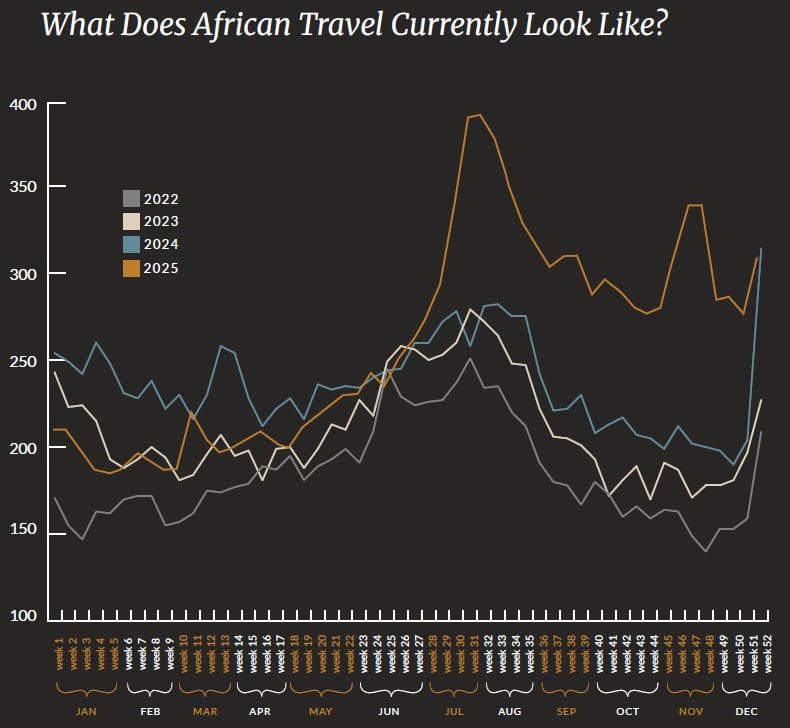
Interest in African safari travel continues to show steady growth, with overall popularity increasing by 14% in 2023, 12% in 2024, and a further 7% in 2025. While year-on-year growth has moderated slightly, the upward trend reflects sustained global demand for safari experiences.
Search behaviour follows a consistent seasonal pattern. Interest typically begins at moderate levels in January, dips slightly in February and March, and then builds steadily through spring before peaking around the summer months of July and August, aligning with peak safari season across much of Africa. From fall and through winter in the Northern hemisphere, interest begins to decline, reaching its lowest levels in November and December. In 2025, summer search peaks reached notably higher levels than in previous years, reinforcing the broader growth in interest.
Alongside traditional search behaviour, traveller research habits are evolving. With the growing popularity of large language models (such as ChatGPT, Copilot and Gemini), we have seen increased channel diversification, giving travellers additional research tools alongside search engines. Within the wider travel industry AI usage, particularly ChatGPT, increased in the USA from February to March 2025 and again from June to July. From July onwards, usage steadily declined before rebounding in December 2025, continuing the upward momentum. This sustained uptick highlights an emerging shift in how travellers are discovering and planning their trips.
“Enquiry data offers a valuable window into travellers' mindsets at the earliest stage of their journey. It highlights the destinations capturing their imagination, often the most iconic and sought-after.
However, as we begin shaping the journey together and balance personal preferences with our guidance on logistics, flight connections, seasonality, accommodation availability and budget, those initial preferences often evolve. A traveller enquiring about a single iconic experience may ultimately discover their dream holiday enriched with a hidden gem or island retreat, creating an African journey that rewards with wildlife, beach, culture and nature in equal measure.
That evolution is entirely natural. Sales data reflects this next stage of the journey, where inspiration for Africa's iconic experiences meets real-world practicality. It is in guiding travellers towards the right combination of experiences and presenting thoughtfully curated ideas that align with their shared interests, from gorilla trekking to walking safaris, island hopping to culturally immersive encounters, that our expertise delivers its greatest value.”
– Liesel van Zyl, Head of Positive Impact and Product Development, Go2Africa
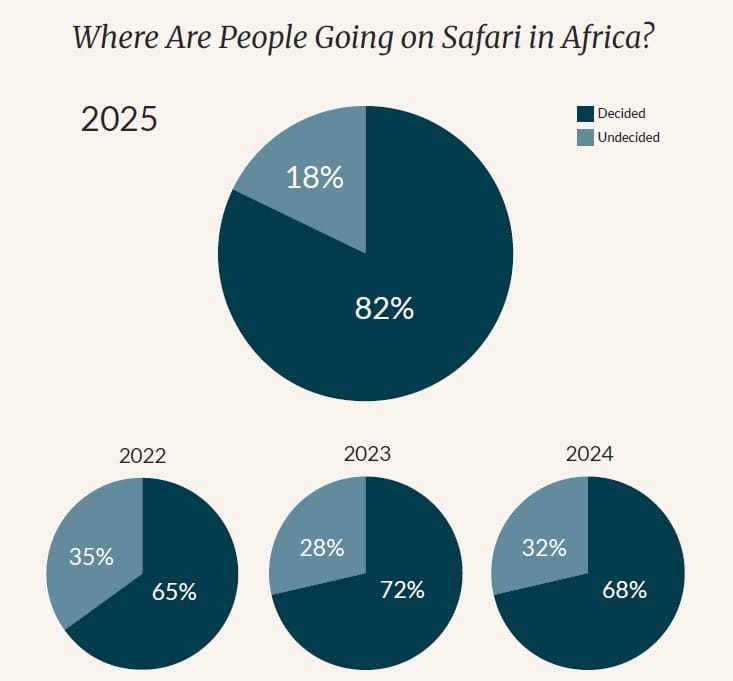
Over the past four years, we have seen clear shifts in how prepared travellers are when enquiring about an African safari. In 2022, 65% of travellers had already decided on their safari destination, while 35% remained undecided. This rose to 72% in 2023 before dipping slightly to 68% in 2024. In 2025, however, there has been a notable change. A total of 82% of travellers now approach their enquiry with a clear destination in mind, while just 18% remain undecided. This represents the lowest level of indecision recorded over the past four years and a significant increase in customer preparedness.
The proportion of decided travellers in 2025 is nearly 14% higher than in 2024 and substantially above the average of the preceding three years. This shift suggests a change in how travellers are conducting their early-stage safari research.
Historically, many travellers relied on search engines and safari experts to help narrow down destination options, particularly first-time safari goers who benefit from having the differences between safari countries clearly explained. In 2025, the higher level of decision-making before enquiry may reflect the growing influence of LLMs in the research phase. These tools enable travellers to synthesise complex travel information, compare destinations and itineraries, and arrive at a more defined brief before engaging with a safari specialist.
Despite the increased preparedness, the traveller profile remains largely consistent. In 2025, 75% of enquiries came from first-time visitors to Africa, while 25% were from returning travellers. Among those who had travelled to Africa before, experience levels were evenly split, with 49% having visited the continent multiple times and 51% having travelled to Africa once previously. This highlights that while most safari travellers are new to Africa, a meaningful proportion of repeat visitors continue to return, often seeking deeper or more varied safari experiences.
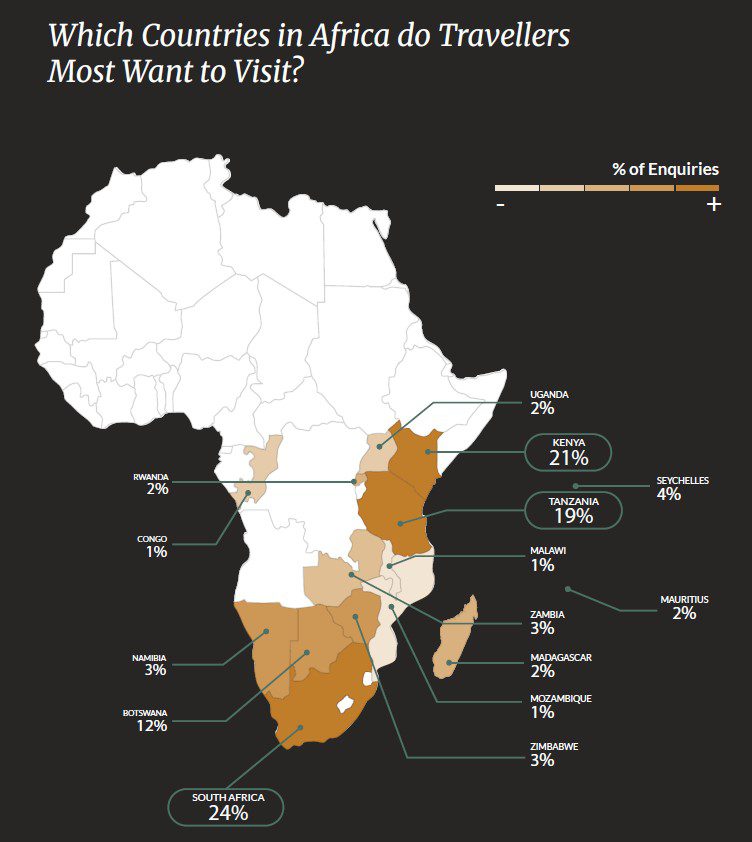
In 2025, South Africa remains the most popular safari destination, accounting for 24% of all enquiries. Kenya and Tanzania follow closely behind, with 21% and 19% respectively. Together, these three destinations represent 64% of total safari interest where they accounted for 60% in 2024 and 2023. The increase (+4%) highlights the continued dominance of Southern and East Africa's most established safari countries.
While South Africa continues to lead, several destinations saw notable shifts in interest year on year. Botswana recorded the most significant increase, with its share of enquiries rising from 7% in 2024 to 12% in 2025. This places Botswana well above its average share over the past three years and suggests a sustained rise in popularity, likely driven by its reputation for ultra-luxurious and exclusive wildlife experiences.
Kenya also experienced strong growth, increasing its share of enquiries by 3% from 18% in 2024, and overtaking Tanzania to become the second most enquired-about safari destination in 2025. Tanzania saw a more modest increase, while South Africa continued its steady upward trajectory.
At the same time, several destinations experienced a decline in enquiry share. Zimbabwe saw the largest decrease (-3%), followed by Seychelles (-2%), Namibia (-2%), and Rwanda (-1%). In the case of Indian Ocean islands, this softening comes after strong growth in previous years, suggesting a degree of market correction following heightened post-pandemic interest in island and beach destinations.
Overall, the 2025 data points to a market that continues to favour well-known safari destinations, while also showing growing interest in countries offering distinctive and immersive safari experiences. The rise of Botswana and the sustained strength of Kenya, Tanzania, and South Africa suggest that travellers are increasingly confident in choosing destinations that combine exceptional wildlife viewing with established tourism infrastructure and accessibility.
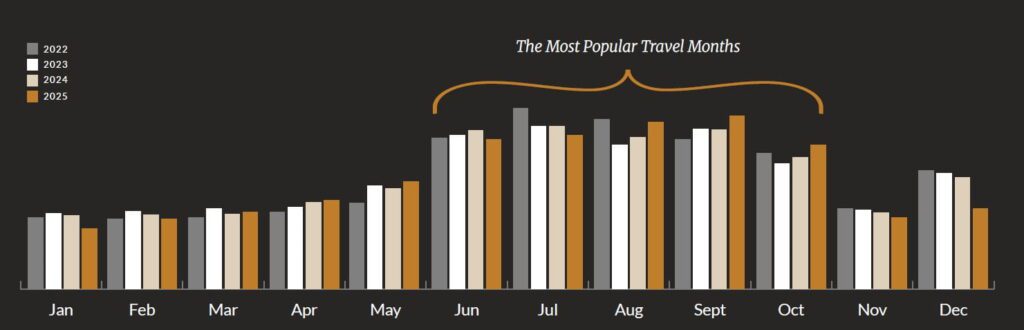
Safari travel continues to follow a clear seasonal pattern, but 2025 data shows a notable shift in when travellers are choosing to go. While mid-year travel remains popular, enquiries are increasingly moving away from the traditional summer high season and towards the shoulder months.
In 2025, the combined shoulder season months of April, May, September, and October accounted for 38% of all safari enquiries, making this the most popular travel window for the first time in the available data. This marks a continued increase of 3% in shoulder season travel compared to 2024 and highlights a growing preference for travel outside of the peak summer period. By contrast, the traditional high season months of June, July, and August saw a slight softening, accounting for 34% of enquiries in 2025, down marginally from the previous year.
The strongest growth was concentrated in the post-summer shoulder season. September and October recorded notable increases compared to the average of the preceding three years, indicating a clear shift towards early-autumn travel in the northern hemisphere. At the same time, enquiries declined most noticeably in January and July, suggesting that travellers are increasingly avoiding both the New Year period and the height of the summer peak.
This movement towards the shoulder season reflects a more considered approach to safari planning. September and October coincide with the latter part of the dry season in many East and Southern African destinations, offering excellent wildlife viewing, clear skies, and fewer crowds than the July and August peak. These trends suggest that travellers are becoming more informed about optimal safari conditions and are prioritising quality of experience over traditional holiday timing.
Overall, while peak season travel remains popular, the continued broadening of the safari season reinforces the importance of planning well in advance. As demand spreads more evenly across the year, early enquiries remain key to securing the best availability, particularly for sought-after lodges during both peak and shoulder travel periods.
In 2025, traveller interest continued to centre on iconic safari experiences, with classic bucket list destinations and wildlife encounters dominating enquiries. Kruger National Park remains the most sought-after experience, accounting for 28% of all enquiries, reinforcing its status as a cornerstone of African safari travel. Big 5 safaris follow closely behind at 25%, highlighting the enduring appeal of this quintessential wildlife experience.
Beyond traditional safaris, travellers are increasingly combining wildlife encounters with complementary experiences. Beach and safari combinations account for 10% of enquiries, reflecting continued demand for trips that blend game viewing with time on Africa's coast or island destinations. Victoria Falls also remains a strong draw, featuring in 10% of enquiries, while migration safaris represent 7% of interest, appealing to travellers seeking seasonal, once-in-a-lifetime wildlife spectacles.
There are also clear signs of diversification in traveller preferences. Gorilla trekking features in 5% of enquiries, reinforcing its role as an add-on to more traditional safari itineraries rather than a standalone trip. Similarly, experiences centred around Cape Town account for 5% of interest, often paired with Southern or East African safaris to create a more rounded journey.
Smaller but meaningful segments of travellers are seeking more immersive and slower-paced experiences. Active travel, cultural experiences, and rest-focused itineraries together reflect a growing desire to move beyond simple game drives and include deeper engagement with destinations, landscapes, and communities.
Overall, the 2025 data points to a traveller who still values Africa's most iconic wildlife experiences, but who is increasingly looking to layer these with varied, immersive, and well-balanced activities. Rather than replacing classic safaris, these preferences suggest an evolution toward richer, more personalised itineraries that combine the familiar with the unexpected.
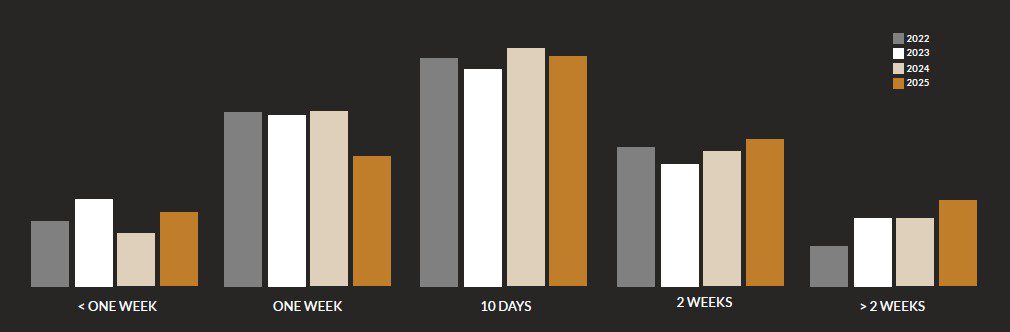
In 2025, safari travel duration shows a clear shift away from the traditional one-week itinerary, with travellers increasingly opting for either shorter breaks or longer, more immersive journeys.
Trips of 10 days remain the most popular choice, accounting for just over 35% of all enquiries and continuing to act as the anchor duration for African safaris. However, interest in one-week trips declined notably in 2025, falling to 22% of enquiries from 26% of enquiries in 2024. This represents a significant drop compared to both 2024 and the average of the preceding three years, signalling a change in how travellers are structuring their time in Africa.
At the same time, demand has grown at both ends of the spectrum. Short trips of less than one week saw the largest increase year on year. Longer trips also gained momentum, with both two-week and two-weeks-plus itineraries increasing their share of enquiries. This points to a growing segment of travellers seeking deeper exploration, slower pacing, or multi-country journeys.
Overall, 2025 reflects a polarisation in safari travel length. More travellers are increasingly choosing either short trips of less than one week or committing to longer, more comprehensive experiences of two weeks or more, while the standard one-week safari is becoming less central to planning behaviour.
Budget data for 2025 continues to reflect a shift towards higher overall spend, building on trends seen in recent years. Average safari budgets per person sharing reached approximately $6,500 in 2023 and increased to $7,500 in 2024. The latest data now indicates that average spend reached approximately $8,625 per person sharing in 2025.
This steady upward trend highlights a market that is increasingly willing to invest more in safari travel, driven by longer trip durations, a growing appetite for high-end experiences, alongside the rising costs associated with delivering high-quality safari journeys.
Following the trend of previous years, medium budgets continue to decline as a proportion of overall enquiries, while medium-high budgets now account for the majority. This shift underscores a market that is increasingly prioritising quality, exclusivity, and personalised experiences, with travellers showing a greater willingness to invest in once-in-a-lifetime safari journeys.
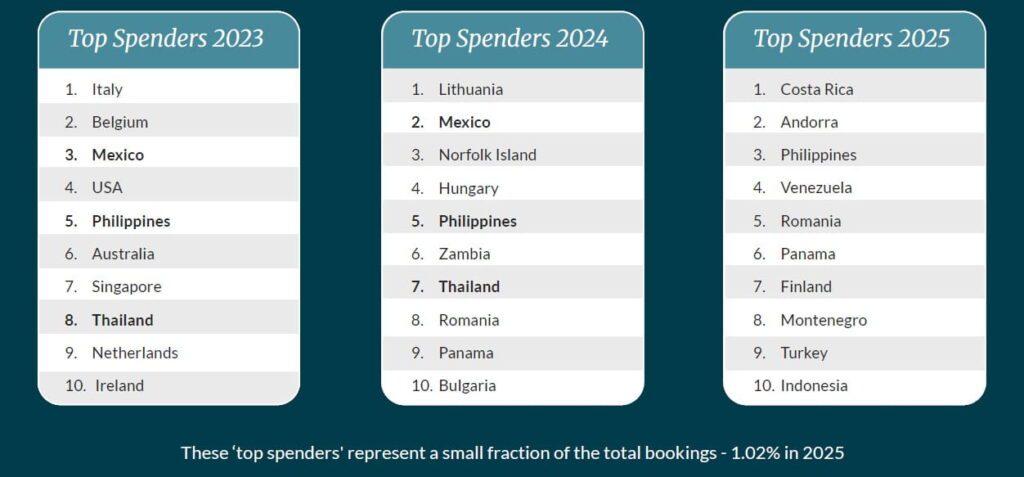
Each year, we analyse the average safari spend based on the country from which a booking originates. As with previous years, this data is influenced by a small number of outlying countries with limited booking volumes. While this makes the findings interesting, it does not necessarily reflect the highest-spending markets overall, particularly those with larger and more representative sample sizes.
In 2025, the highest average safari spend came from a diverse mix of countries, including Costa Rica, Andorra, the Philippines, Venezuela, Romania, Panama, Finland, Montenegro, Turkey, and Indonesia. In line with previous years, these top-spending countries represent a very small share of total bookings, accounting for just 1% in 2025.
The continued appearance of less traditional source markets among the highest spenders suggests that when travellers from these regions do book an African safari, they are often doing so as a premium, once-in-a-lifetime experience. While this group remains small, it offers an interesting lens into how safari travel is perceived and prioritised across different global markets.
Traveller profiles in 2025 remain broadly consistent with previous years, with travel as a couple continuing to dominate safari enquiries. Nearly half of all travellers are doing so with a partner, accounting for 46% of enquiries. Family travel also continues to play a significant role, representing 28% of all safari enquiries, reinforcing the ongoing appeal of safaris for family and multi-generational travel.
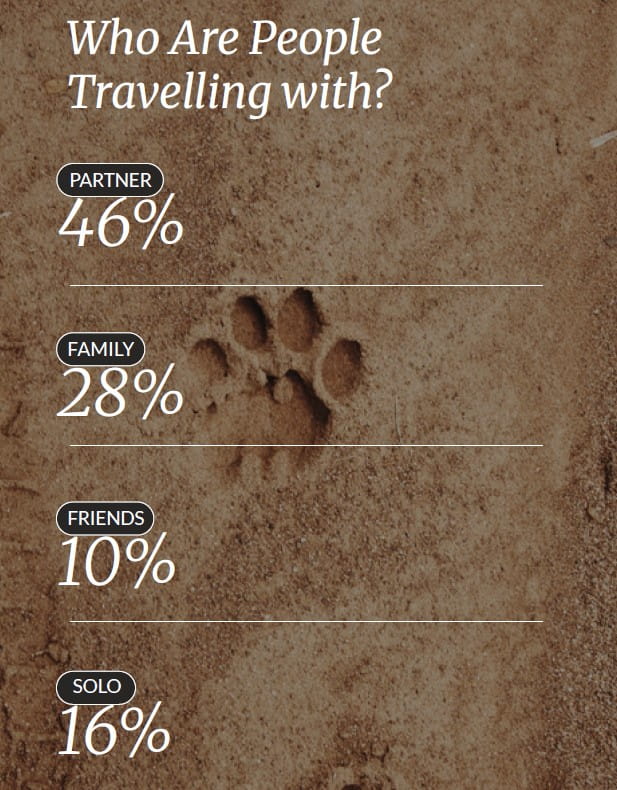
One of the most notable shifts in 2025 is the continued rise in solo travel. Solo travellers now account for 16% of enquiries, compared to 13% of enquiries in 2024, suggesting growing confidence among independent travellers. Travel with friends remains a smaller but steady segment, accounting for 10% of enquiries, with these groups typically seeking flexible, tailor-made safari experiences rather than scheduled group departures.
Destination preferences vary noticeably by traveller type. Families are most commonly drawn to South Africa, Kenya, and Tanzania, destinations that offer strong wildlife experiences alongside a wide range of family-friendly lodges and activities. Travellers visiting with friends show a strong interest in destinations such as South Africa, Rwanda, and Uganda, often prioritising unique wildlife encounters and immersive experiences.
Travel with a partner is most concentrated in exclusive coastal and island destinations, with Seychelles, Mozambique, and Botswana standing out as their chosen romantic settings and high-end safari offerings. Solo travellers showed the most interest in Malawi, Rwanda, and Congo, suggesting a preference for more off-the-beaten-path destinations that appeal to confident and experience-driven travellers.
Together, these patterns highlight a safari market that continues to cater to a wide range of traveller types, while also reflecting a growing diversity in how and with whom travellers are choosing to experience Africa.
“I always find traveller-type data interesting because it's rarely as binary as it looks on paper. In reality, many enquiries don't fit neatly into one category. A trip might be a couple travelling with friends, or a multi-generational family with extended relatives. So while the data gives us a helpful snapshot, the nuances often emerge once we start working directly with the client and shaping the itinerary.
With solo travel in particular, there's definitely growing interest, especially in more adventurous or off-the-beaten-path destinations. While places like Rwanda, Congo and Botswana can involve high costs when factoring in single supplements, what we often see is not a drop-off in interest, but a shift in strategy needed. With the right guidance, solo travellers might discover the benefits of travelling through shoulder seasons or start to consider equally exciting destinations and experiences that offer strong value without compromising on the experience.”
– Justin Chapman, Africa Safari Expert, Go2Africa
Based on the analysis of travellers’ party types, the top three destinations vary significantly, particularly when looking at the proportion of each country’s total visitors that belong to a specific party type. For family travellers, the top three destinations are South Africa (32% of all travellers to South Africa are families), Kenya (30%), and Tanzania (28%).
Friends show a different set of priorities, with their top three destinations being South Africa (11%), Rwanda (11%), and Uganda (11%). Travel with a partner is most concentrated in the more exclusive island and coastal destinations, with the top three being Seychelles (55% of all visitors to Seychelles are partners), Mozambique (51%), and Botswana (50%). Finally, Solo travellers are most prevalent in Malawi (31% of all visitors to Malawi are solo), Rwanda (30%), and Congo (27%).
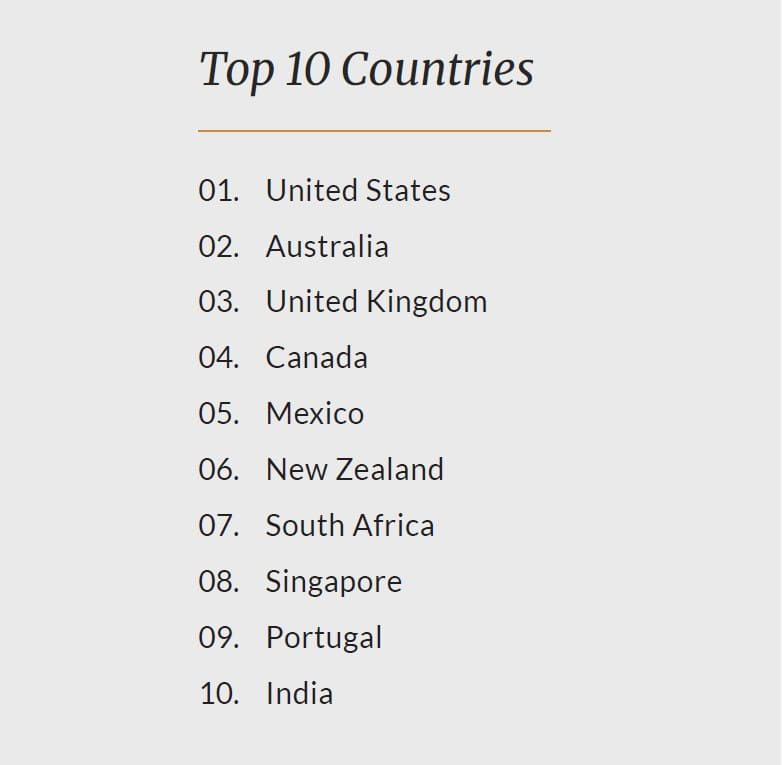
In terms of country-specific interest, the United States remains the leading source of safari enquiries for Go2Africa in 2025, followed by Australia, the United Kingdom, and Canada. These markets continue to form the core of safari demand, reflecting their long-standing engagement with African travel.
Alongside these established markets, Mexico continues to feature strongly among the top enquiry sources. In 2025, we also saw increased interest from New Zealand, Portugal, and France compared to the previous year. This growth may be linked to expanded marketing activity and increased visibility in these regions.
The appearance of countries such as Singapore and India within the top ten further highlights the growing global reach of African safaris. Overall, the 2025 data reflects a stable foundation of core enquiry markets, complemented by emerging interest from a broader range of international source countries.
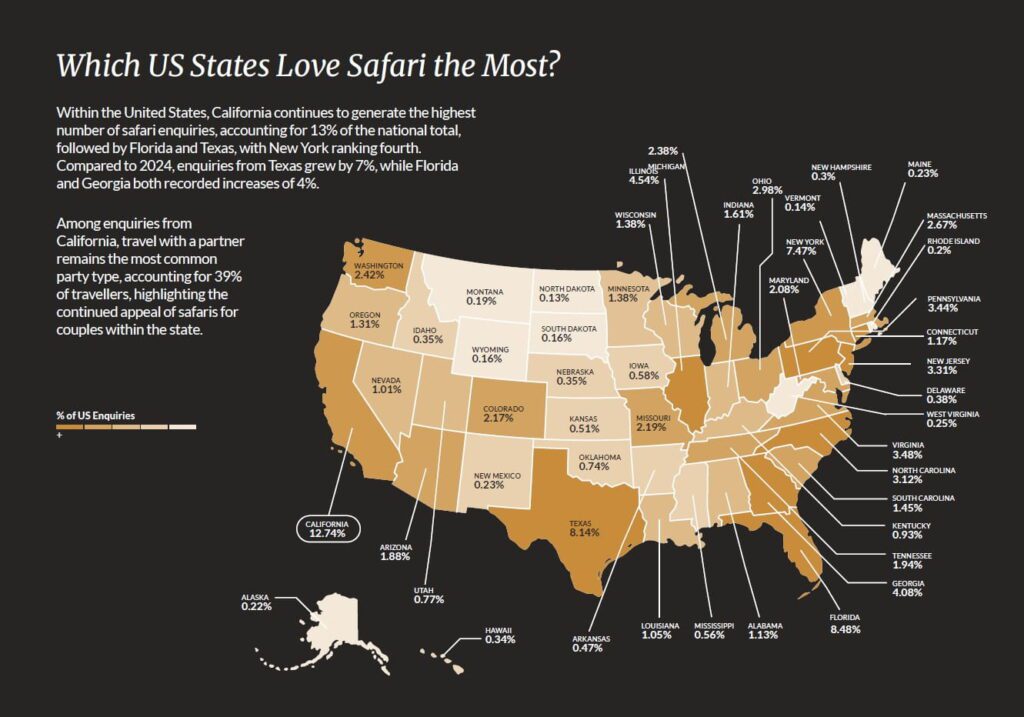
Within the United States, California continues to generate the highest number of safari enquiries, accounting for 13% of the national total, followed by Florida and Texas, with New York ranking fourth. Compared to 2024, enquiries from Texas grew by 7%, while Florida and Georgia both recorded increases of 4%.
Among enquiries from California, travel with a partner remains the most common party type, accounting for 39% of travellers, highlighting the continued appeal of safaris for couples within the state.
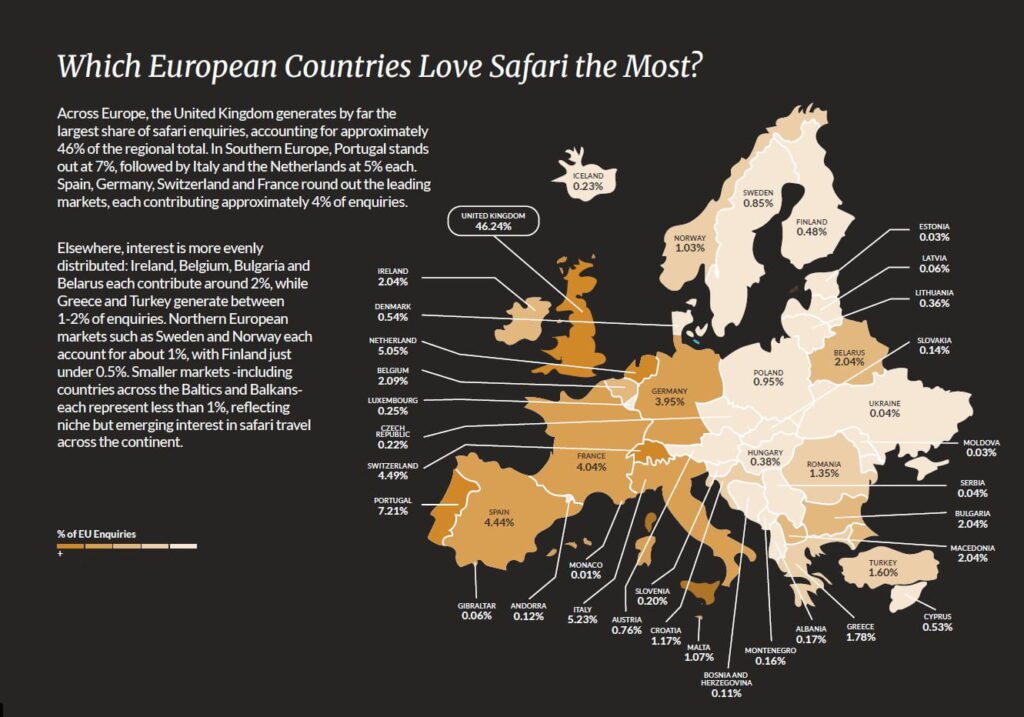
Across Europe, the United Kingdom generates by far the largest share of safari enquiries, accounting for approximately 46% of the regional total. In Southern Europe, Portugal stands out at 7%, followed by Italy and the Netherlands at 5% each. Spain, Germany, Switzerland and France round out the leading markets, each contributing approximately 4% of enquiries.
Elsewhere, interest is more evenly distributed: Ireland, Belgium, Bulgaria and Belarus each contribute around 2%, while Greece and Turkey generate between 1-2% of enquiries. Northern European markets such as Sweden and Norway each account for about 1%, with Finland just under 0.5%. Smaller markets -including countries across the Baltics and Balkans- each represent less than 1%, reflecting niche but emerging interest in safari travel across the continent.
In 2025 and into 2026, safari is increasingly being booked as a reset rooted in nature. It is not spa-first, but space-first. Travellers want room to breathe, fewer transitions, and time to properly settle into a place. We are seeing stronger demand for journeys shaped around silence, scenery, and sensory experiences such as walking safaris, forest immersion, wide views, and unhurried mornings.
This shift connects directly to shoulder season growth and longer booking windows. Travellers are planning more intentionally and choosing dates that offer a calmer pace and fewer vehicles. It is also influencing safari itineraries, with fewer lodge changes, longer stays, and itineraries that feel restorative simply because they are unhurried.
Regenerative travel is moving from a “nice to have” to a genuine decision driver. Guests still want exceptional guiding, comfort, and beauty, but they are increasingly asking what their journey supports. In 2026, premium travel is defined as much by credibility as by setting. Conservation outcomes need to be tangible, community initiatives locally led, and operating models thoughtfully managed.
Across the safari sector, this shift creates space to elevate positive impact from supporting narrative to core positioning. Impact is no longer something added on after the itinerary is designed; it is increasingly embedded in how journeys are structured, how properties operate, and which partnerships are prioritised. The most compelling examples are grounded and specific, demonstrating clearly how travel contributes to landscapes, wildlife and local livelihoods in ways that are measurable, respectful and long term.
Multi-generational travel continues to grow because safari delivers something families struggle to find elsewhere: meaningful time together. In 2025, more families are planning safari as a legacy journey, with grandparents, parents, and children travelling as one group. These trips are often booked well in advance and designed with greater care around pace and comfort.
This trend links directly to longer booking windows and more considered itineraries. Multi-gen travellers are not trying to see everything. They want the right rhythm for every age, from private guiding and flexible days to built-in rest and experiences that genuinely connect the group. Safari becomes less about ticking off sightings and more about shared perspective.
As travellers become more informed, they are also becoming more selective. There is a growing appetite for destinations that feel rarer, with fewer crowds, distinctive landscapes, and access that most people do not yet know exists. Iconic highlights remain important, but the next wave of demand is shaped by travellers who want their safari to feel personal rather than predictable.
Emerging regions and thoughtful new openings are helping to unlock this shift. Uganda is a clear example, particularly as conservation-led, design-forward stays elevate it into a more refined lodge-to-lodge circuit. Gorongosa represents a similar signal. It offers a sense of frontier and restoration, where the story of ecological recovery is part of the experience and the journey feels genuinely different.
“I went to Gorongosa on a personal trip and fell in love. It’s unlike anywhere I’ve ever been – and will appeal to seasoned travellers to Africa. With only two small camps across an area twice the size of London, it’s wild and remote, with hardly any people. The Gorongosa story is nothing short of incredible: the park is being revived to uplift local communities, preserve an extraordinary and diverse landscape, protect endangered species, and offer guests something truly exclusive. If you go with a sense of adventure and a pioneering mindset, you’ll be rewarded with an entirely new type of safari experience.”
– Kate McIntosh, Go2Africa Africa Safari Expert.
In 2025 and beyond, travellers are increasingly pairing traditional game drives with ground-level experiences such as walking safaris, primate trekking, guided hikes and water-based activities. This reflects a broader shift toward “soft adventure”, physically engaging experiences that deepen connection to landscape while maintaining comfort and support. A small but growing segment is also incorporating more intentional physical challenges like trail running, multi-day hikes or long-distance cycling, alongside safari stays.
Rather than redefining safari, adventure is becoming an added dimension, expanding how travellers engage with the wild.
For the full PDF version of our Annual African Safari Travel Report 2025, you can download it here.

 1-866-438-8677
 +27-21-481-4900
 1-888-360-2392
 1-800-619-441
 0800-404-9451
 800-852-6502
